Low-Level Design (LLD): The Blueprint for Scalable & Maintainable Systems
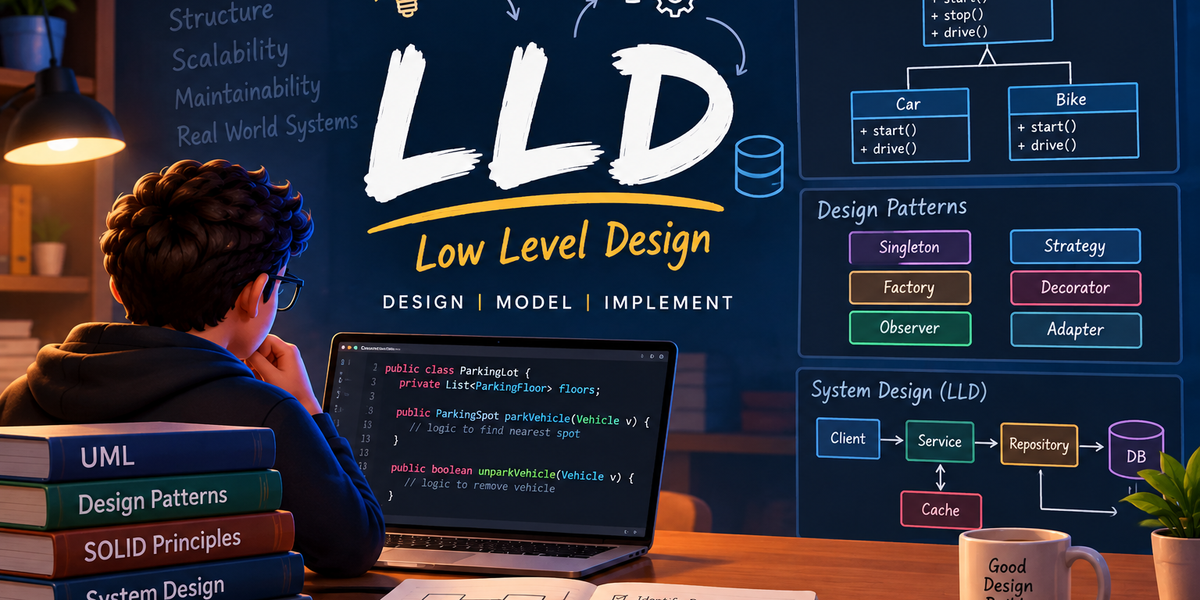
When building production software, writing code that "just works" isn't enough. As systems grow, poorly structured code becomes fragile, difficult to debug, and expensive to change.
Low-Level Design (LLD) is the practice of designing software at the module, class, and method level. It bridges high-level architecture with actual implementation, ensuring that codebases remain clean, extensible, and resilient over time.
Core Pillars of Low-Level Design
1+-----------------------------------------------------------------+2| LOW-LEVEL DESIGN |3+-----------------------------------------------------------------+4 | | |5 v v v6+---------------+ +---------------+ +---------------+7| Scalability | |Maintainability| | Reusability |8| | | | | |9| Easy Feature | | Fast Debugs, | | Decoupled |10| Extension | | No Regression | | Components |11+---------------+ +---------------+ +---------------+
1. Scalability
System scalability at the low-level means code can handle new requirements without requiring structural rewrites. Adding a feature should feel like plugging in a module rather than altering core business logic.
2. Maintainability
Code spends 90% of its lifecycle in maintenance. Maintainable code is self-documenting, easy to trace, and shielded against regressions—adding new code should never break existing, well-tested behavior.
3. Reusability
Decoupled components can be reused across different modules or applications without carrying hidden dependencies or side effects.